
Introduction
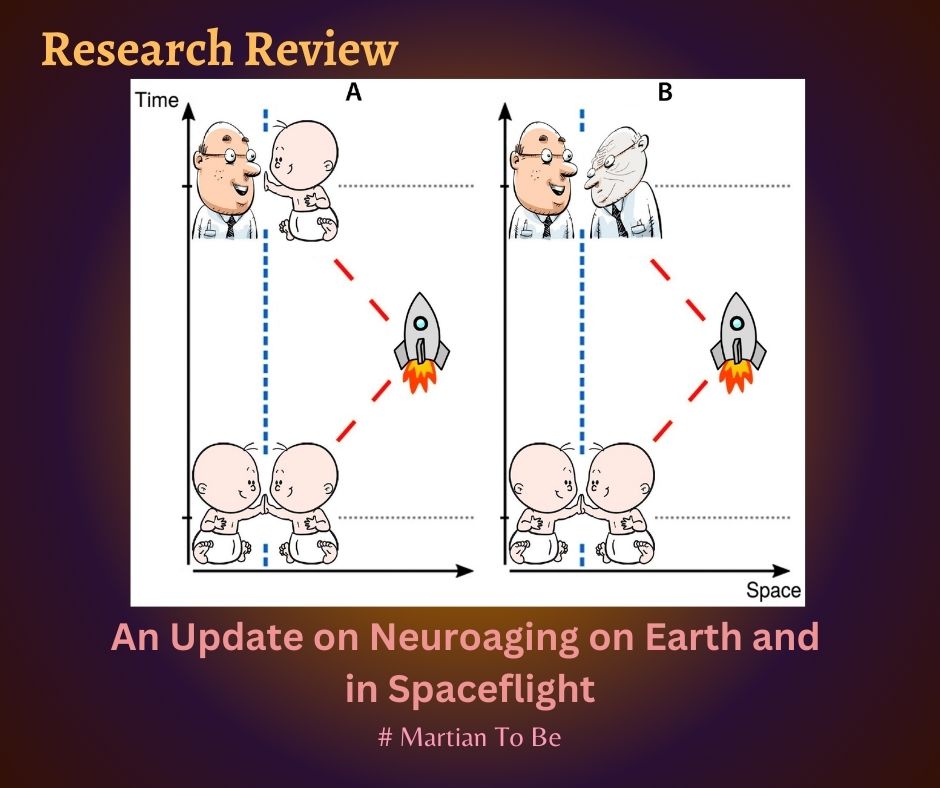
This comprehensive review by Kuznetsov et al. explores the intersection of neuroaging on Earth and in spaceflight, synthesizing findings from over 400 studies. Emphasizing the multifactorial nature of aging, the authors discuss how aging is not a uniform or linear process but rather a mosaic of temporally distinct changes influenced by genetics, epigenetics, oxidative stress, and environmental exposures. The paper places special focus on non-coding RNAs, including microRNAs—recognized for their gene-regulatory roles by the 2024 Nobel Prize in Physiology or Medicine—and outlines how these may serve as molecular biomarkers of brain aging. The concept of accelerated aging (AA) is explored in depth, especially under the extreme conditions of spaceflight, which appear to catalyze aging-like changes more rapidly than Earth-bound scenarios. The review not only draws parallels between terrestrial and extraterrestrial neuroaging but also charts a roadmap for future molecular, diagnostic, and therapeutic directions in aging science.
Contributions of the Paper
Provides a cross-disciplinary synthesis of brain aging mechanisms and their manifestation under spaceflight.
Highlights the pivotal role of non-coding RNAs as biomarkers and regulators of neuroaging.
Frames accelerated aging as a dynamic interaction between intrinsic biology and environmental stressors like microgravity and radiation.
Practical Implications of the Paper
Establishes a molecular framework for predicting and mitigating aging-related declines in astronauts.
Suggests non-coding RNAs as viable diagnostic and therapeutic targets for aging and neurodegenerative diseases.
Supports development of age-specific countermeasures for space missions, such as pharmaceuticals and lifestyle interventions.
Methods Used in the Paper
Systematic review of experimental data, including in vitro models, animal simulators, and omics analyses from astronauts and terrestrial studies.
Comparative genomics and epigenetic profiling, including DNA methylation clocks and histone modification markers.
Integration of omics data from NASA’s GeneLab and multi-organ aging models.
Data Used in the Paper
Over 400 peer-reviewed studies encompassing human, rodent, C. elegans, and Drosophila models.
Omics datasets from spaceflights and microgravity simulations.
Molecular profiling of non-coding RNAs, histone modifications, DNA methylation, and gene expression.
Results of the Paper
Identified over 100 ncRNAs affected by microgravity, with specific miRNAs and lncRNAs regulating neuroplasticity, inflammation, and senescence.
Found spaceflight accelerates hallmarks of aging like cognitive decline, immune dysregulation, muscle atrophy, and bone density loss.
Demonstrated altered epigenetic marks and DNA methylation as reliable aging indicators across multiple tissues.
Conclusions from the Paper
Neuroaging is exacerbated under space conditions due to the “space exposome”—a synergy of microgravity, radiation, isolation, and stress.
Non-coding RNAs are promising tools for understanding and potentially reversing neuroaging effects.
Personalized approaches, including machine learning brain-age predictors, will be key to future aging diagnostics.
Limitations of the Paper
Most findings are extrapolated from simulated environments or animal models, limiting direct applicability to humans.
Heterogeneity in data sources and study designs complicates meta-analysis and generalization.
Methodological challenges in assessing biological age and defining “normal” aging across tissues remain unresolved.
Future Works Suggested in the Paper
Validation of ncRNAs and epigenetic clocks as clinical biomarkers.
Longitudinal studies tracking age progression in astronauts.
Development of molecular countermeasures tailored to individual ageotypes and space-specific stress responses.
