
Link to the paper: https://www.nature.com/articles/s41526-025-00465-0
Introduction
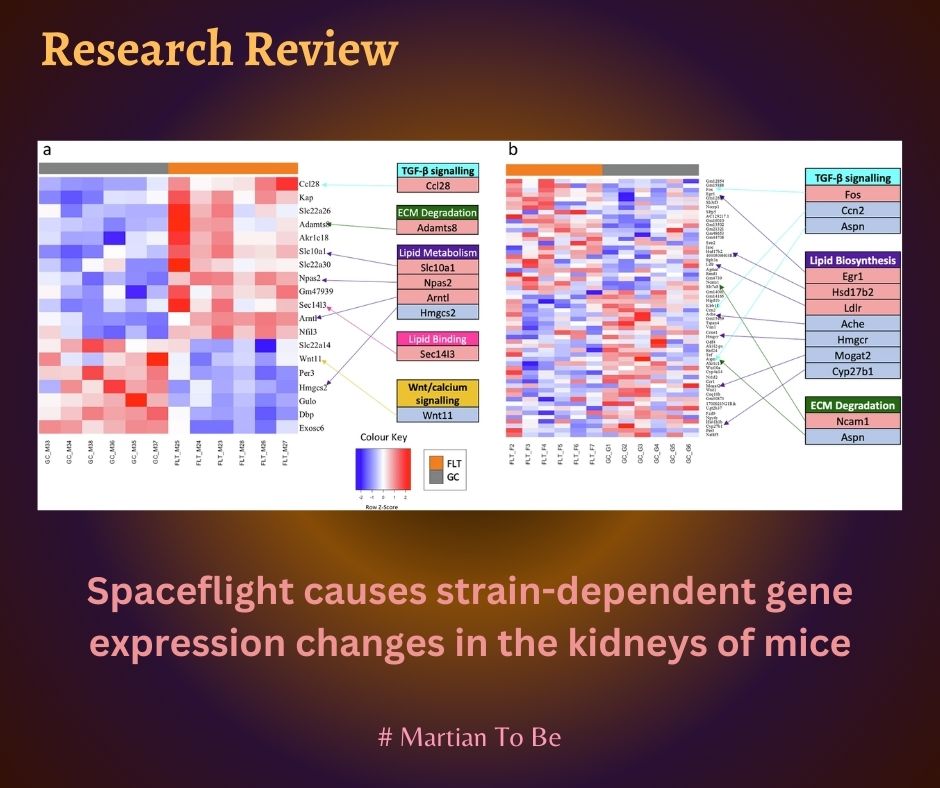
The study titled “Spaceflight causes strain-dependent gene expression changes in the kidneys of mice” explores how the kidneys of two different mouse strains (C57BL/6J and BALB/c) respond differently to the space environment. Given the increased risk of kidney stones among astronauts—attributable to microgravity-induced bone loss and increased calcium levels—understanding how genetic background affects renal responses is crucial. Through transcriptomic analysis of mice flown aboard the International Space Station, the study identifies significant changes in genes related to lipid metabolism, extracellular matrix degradation, and TGF-β signaling. These findings not only provide insights into potential risk factors for renal disease during long-term space missions but also highlight the importance of personalized medical approaches for astronaut health.
Contributions of the Paper
- First comprehensive analysis of kidney transcriptomic differences between two mouse strains (C57BL/6J and BALB/c) exposed to spaceflight.
- Highlights the role of genetic background in modulating susceptibility to renal injury during space missions.
Practical Implications of the Paper
- Supports the development of targeted countermeasures for kidney stone prevention in astronauts based on genetic susceptibility.
- Offers groundwork for using transcriptomic data in pre-flight health screening and risk assessment.
Methods Used in the Paper
- Transcriptomic data from NASA GeneLab datasets (OSD-102 and OSD-163) was analyzed.
- Differential expression was assessed using DESeq2 in R Studio, with further gene set enrichment and pathway analysis via WebGestalt, GSEA, and Cytoscape tools.
Data Used in the Paper
- Kidney tissue RNA-seq data from C57BL/6J (RR-1 mission) and BALB/c mice (RR-3 mission) exposed to spaceflight.
- Data sets included normalized gene counts and were compared to both ground controls and baseline samples.
Results of the Paper
- C57BL/6J mice exhibited greater transcriptomic disruption than BALB/c, especially in lipid metabolism and fibrotic pathways.
- BALB/c mice showed more adaptive responses, possibly due to genetic differences affecting pathways like hyaluronan metabolism.
Conclusions from the Paper
- Genetic background significantly influences how organisms respond to spaceflight, with implications for renal health and fibrosis risk.
- The study underscores the need for individualized health strategies in space medicine.
Limitations of the Paper
- Mice were flown on different missions with slight protocol variations, limiting direct comparisons.
- Lack of physiological validation of transcriptomic findings, such as histological confirmation of kidney damage.
Future Works Suggested in the Paper
- Investigate other organ systems and broader genetic panels to determine multi-systemic effects of spaceflight.
- Incorporate histological and biochemical analyses to validate transcriptomic data.
- Extend research to human models to assess translational relevance for astronaut health management.
