
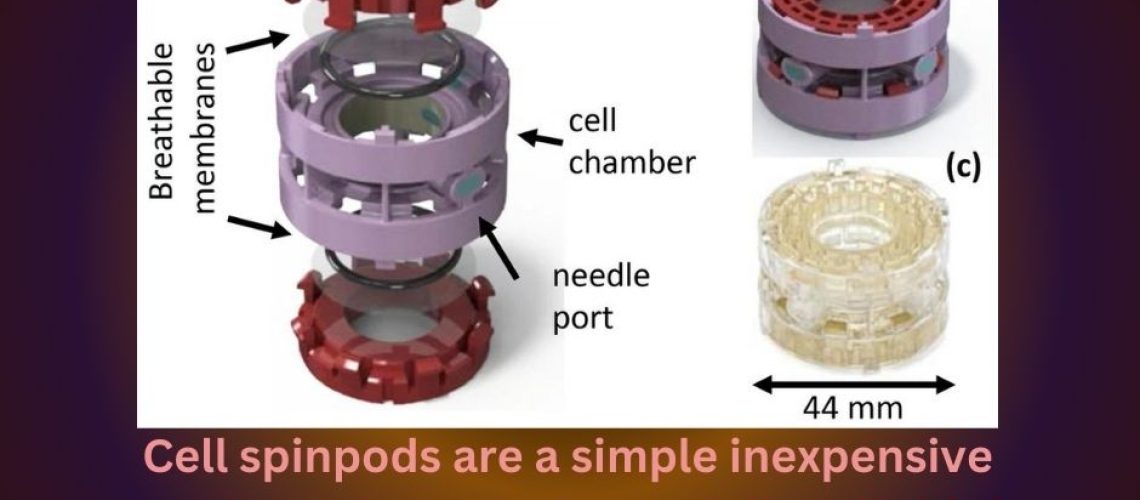
Link to the paper: https://www.nature.com/articles/s41598-021-00304-8
Cell spinpods are a cost-effective suspension culture device designed to deliver physiologically relevant levels of shear stress to renal proximal tubular cells, addressing challenges of expensive vessels and scalability for industrial applications.
These small vessels are constructed with self-sealing silicone rubber ports and breathable membranes, allowing for two-fluid modeling of flow and stresses, and have been used to study the effects of fluid shear stress on renal cell gene expression and functions, such as membrane transporters and mitochondrial function.
🟤Contributions of the Paper
🔹Cell spinpods offer a simple and cost-effective solution for suspension culture, providing physiologically relevant levels of shear stress to renal proximal tubular cells, which can prevent de-differentiation and enhance cellular functions.
🔹The vessels are constructed from injection-molded thermoplastic polymer components, featuring self-sealing axial silicone rubber ports and breathable membranes, allowing for two-fluid modeling of flow and stresses.
🔹The study conducted using cell spinpods demonstrated the impact of fluid shear stress on renal cell gene expression and functions, including membrane transporters, mitochondrial function, and responses to nephrotoxic substances like myeloma light chains, cisplatin, and doxorubicin.
🔹Rotation in cell spinpods was found to increase the release of nephrotoxicity cytokine markers in a toxin-specific pattern when exposed to myeloma immunoglobulin light chains, while the addition of nephrotoxins reversed the enhanced glucose and albumin uptake induced by fluid shear stress in the cultures.
🔹Overall, the paper introduces cell spinpods as a valuable tool for enhancing cellular functions in in vitro studies of nephrotoxicity, providing a simple, inexpensive, and easily automated culture device for research purposes.
🟣Practical Implications of the Paper
🔸Cell spinpods offer a practical and cost-effective method for researchers to study renal proximal tubular cells in suspension culture, providing in vivo levels of shear stress that mimic physiological conditions.
🔸These vessels are constructed from durable materials and feature self-sealing ports and breathable membranes, allowing for easy two-fluid modeling of flow and stresses.
🔸By using cell spinpods, researchers can investigate the effects of fluid shear stress on renal cell gene expression and functions, such as membrane transporters, mitochondrial activity, and responses to nephrotoxic substances like myeloma light chains, cisplatin, and doxorubicin.
🔸The study conducted using cell spinpods revealed that rotation in these vessels can enhance the release of nephrotoxicity cytokine markers in a toxin-specific pattern, providing valuable insights into nephrotoxic responses in renal cells.
🔸Additionally, the ability to reverse the effects of fluid shear stress on glucose and albumin uptake by adding nephrotoxins demonstrates the potential of cell spinpods in studying and potentially mitigating nephrotoxicity in renal cells.
🟤Methods Used in the Paper
🔹Cell spinpods, a novel suspension culture device, were utilized to deliver fluid shear stress to renal proximal tubular cells, enabling the study of cellular responses under physiological conditions.
🔹The cell spinpods are small vessels with a 3.5 mL capacity, made from injection-molded thermoplastic polymer components, featuring self-sealing axial silicone rubber ports and breathable membranes.
🔹Two-fluid modeling was employed to analyze the flow and stresses within the cell spinpods, providing insights into the effects of fluid shear stress on renal cell gene expression and functions.
🔹The study involved exposing renal cells to myeloma immunoglobulin light chains and nephrotoxic substances like cisplatin and doxorubicin in the rotating cell spinpod cultures to observe changes in cellular responses and toxicity markers.
🔹Researchers used the cell spinpods to investigate the impact of fluid shear stress on various cellular functions, including membrane transporters, mitochondrial function, and responses to nephrotoxic substances, enhancing the understanding of nephrotoxicity in renal cells.
🟣Data Used in the Paper
🔸The research paper utilized cell spinpods, a suspension culture device, to deliver fluid shear stress to renal proximal tubular cells, enabling the study of cellular responses under physiological conditions.
🔸Cell spinpods are small vessels with a 3.5 mL capacity, constructed from injection-molded thermoplastic polymer components, featuring self-sealing axial silicone rubber ports, and breathable membranes.
🔸Two-fluid modeling was employed to analyze the flow and stresses within the cell spinpods, providing insights into the effects of fluid shear stress on renal cell gene expression and functions .
🔸The study involved exposing renal cells to myeloma immunoglobulin light chains and nephrotoxic substances like cisplatin and doxorubicin in the rotating cell spinpod cultures to observe changes in cellular responses and toxicity markers.
🔸Researchers used the cell spinpods to investigate the impact of fluid shear stress on various cellular functions, including membrane transporters, mitochondrial function, and responses to nephrotoxic substances, enhancing the understanding of nephrotoxicity in renal cells.
🟤Results of the Paper
🔹The cell spinpod design was developed using 3D modeling software and produced through injection molding, resulting in a 3.5 mL capacity vessel with self-sealing silicone ports for sample loading and removal.
🔹Gas exchange within the cell spinpods was validated by monitoring pH changes and supporting cell growth without contamination for several days.
🔹The cell spinpods were rotated on a laboratory bottle roller in a 5% CO2 incubator to provide continuous sedimentation of particles, inducing cellular shear stress without turbulence, allowing for in situ monitoring of contents through optically clear membranes.
🔹Fluid shear stresses within the cell spinpods were calculated, showing non-uniform distribution of cells in an annular path, with the highest stresses near the vessel wall decreasing towards the center where particle volume fraction is highest.
🔹Exposure to fluid shear stress in rotating cell spinpods did not significantly alter cell viability or apoptosis levels compared to static cell spinpods, but it reduced the release of NGAL, a kidney injury marker, by renal cells in the rotating setup.
🟣Conclusions from the Paper
🔸The study successfully demonstrated that cell spinpods, as a new generation of suspension culture devices, are simple, inexpensive, and provide controlled levels of shear stress to renal proximal tubular cells, making them a valuable tool for studying renal physiology and pathophysiology.
🔸Cell spinpods offer a cost-effective solution for researchers to study renal cell gene expression, cellular functions, and nephrotoxicity, particularly focusing on membrane and xenobiotic transporters, mitochondrial function, and responses to nephrotoxic substances like myeloma light chains, cisplatin, and doxorubicin.
🔸The rotation of cell spinpods induced fluid shear stress on renal cells, leading to enhanced cellular functions without significant effects on cell viability or apoptosis levels, highlighting the potential of cell spinpods in providing in vitro physiologically relevant levels of shear stress for research purposes.
🔸The use of cell spinpods allows for the exposure of cells to uniform low levels of fluid shear stress, mimicking the shear stress experienced by cells in the body under flow conditions, which is crucial for maintaining cellular differentiation and various cellular functions.
🔸Overall, the research paper concludes that cell spinpods are a valuable, easily automated, and affordable culture device that can enhance cellular functions and provide a platform for studying nephrotoxicity in vitro, offering researchers a simple yet effective tool for their studies.
🟤Limitations of the Paper
🔹The study primarily focuses on the application and benefits of cell spinpods as a suspension culture device for renal proximal tubular cells, but it does not extensively discuss the comparison of cell spinpods with other existing suspension culture technologies or devices.
🔹While the paper highlights the advantages of using cell spinpods in studying nephrotoxicity and renal physiology, it does not delve deeply into the potential challenges or limitations that researchers may face when using these devices in different experimental setups or conditions.
🔹The research paper mainly emphasizes the positive outcomes and results obtained from using cell spinpods, but it lacks a detailed analysis of the potential variability or reproducibility issues that may arise when conducting experiments with these devices in different laboratory settings.
🔹The study does not provide information on the long-term effects or extended use of cell spinpods on renal cells, which could be crucial for understanding the sustainability and reliability of using these devices for prolonged experimental studies.
🔹The paper does not address the scalability of cell spinpods for industrial applications or large-scale experiments, which could be a significant limitation for researchers looking to implement these devices in high-throughput screening or production environments.
🟣Future Works Suggested in the Paper
🔸Investigating the long-term effects of using cell spinpods on renal cells to understand the sustainability and reliability of these devices for extended experimental studies.
🔸Exploring the potential challenges and limitations that researchers may encounter when using cell spinpods in different experimental setups or conditions to provide a comprehensive understanding of their applicability.
🔸Conducting comparative studies between cell spinpods and other existing suspension culture technologies or devices to evaluate the unique advantages and limitations of using cell spinpods in renal research.
🔸Addressing the reproducibility and variability issues that may arise when utilizing cell spinpods in diverse laboratory settings to ensure the reliability and consistency of experimental results.
🔸Assessing the scalability of cell spinpods for industrial applications or large-scale experiments to determine their feasibility for high-throughput screening and production environments.
🔸Exploring additional applications of cell spinpods beyond nephrotoxicity studies to broaden the scope of research areas where these devices can be beneficial.
We value your ideas and feel free to comment below.
Martian To Be follow us 🤩
#mars #martiantobe #cellspinpods
