
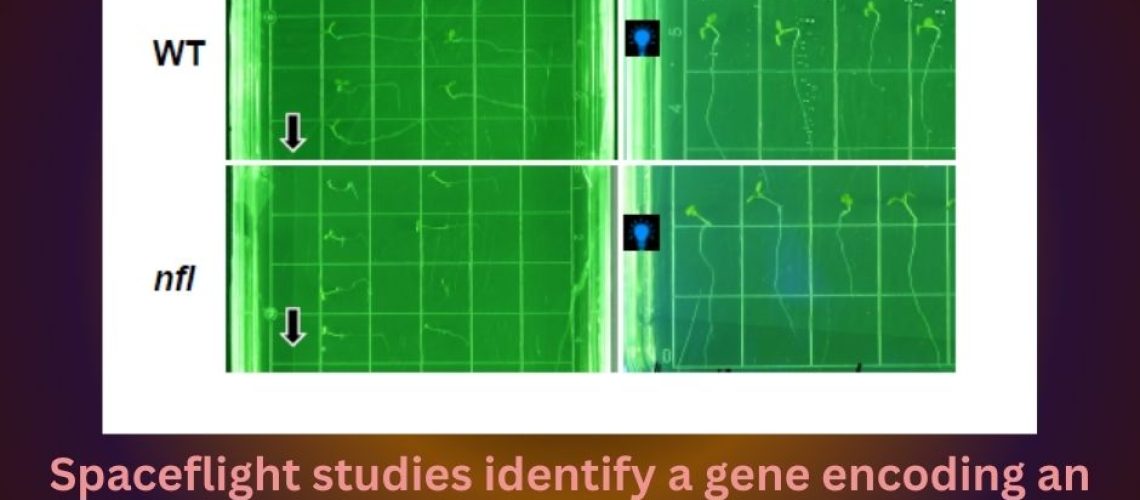
Link to the paper: https://doi.org/10.1016/j.plaphy.2021.12.039
Seedlings grown on the ISS were frozen and returned for analysis via RNASeq.
Five genes with significant expression differences related to light and gravity perception were chosen, including one encoding an intermediate filament (neurofilament light protein) involved in phototropism and gravitropism pathways.
🟢Contributions of the Paper
🔹Identification of five genes with significant expression differences related to light and gravity perception, including one encoding an intermediate filament (neurofilament light protein) involved in phototropism and gravitropism pathways .
🔹Study of the interaction between phototropism and gravitropism in Arabidopsis thaliana on the International Space Station, providing insights into plant tropism mechanisms.
🔹Demonstration of the role of NFL gene in modulating signal transduction in plants during phototropism and gravitropism, highlighting the importance of cytoskeletal elements in plant responses to environmental stimuli.
🔵Practical Implications of the Paper
🔸Understanding the genes involved in light and gravity perception can help in developing strategies to optimize plant growth in space environments .
🔸Insights gained from studying the interaction between phototropism and gravitropism can aid in enhancing agricultural practices on Earth by improving plant responses to light and gravity cues.
🔸Identification of the NFL gene’s role in modulating plant signal transduction during tropisms opens up avenues for genetic manipulation to enhance plant growth and stress responses.
🔸The findings emphasize the importance of cytoskeletal elements, like intermediate filaments, in mediating plant tropic responses, which could lead to the development of novel biotechnological applications in agriculture and space exploration.
🟢Methods Used in the Paper
🔹Seedlings were grown on the International Space Station (ISS) and frozen for RNASeq analysis .
🔹Five genes with significant expression differences related to light and gravity perception were selected for further study, including mutants of these genes for tropism assays on the ground .
🔹Time course studies were conducted using mutant strains of the identified genes for phototropism and gravitropism assays on the ground .
🔹RT-PCR analyses were performed to examine the expression of the five genes in wild-type seedlings during blue-light-based phototropism .
🔹Previous studies on microfilaments and microtubules in tropism pathways were considered to understand the role of cytoskeletal elements in plant responses to light and gravity cues .
🔵Data Used in the Paper
🔸The research paper utilized data from experiments conducted to study the interaction between phototropism and gravitropism in Arabidopsis thaliana.
🔸The study focused on five genes identified through their differential expression in space conditions, with one gene involved in auxin transport and the other four encoding genes related to tropisms.
🔸Physiological studies were performed on mutant strains of these genes to understand their effects on tropisms, particularly in microgravity conditions compared to the 1-g control.
🔸RNA profiling studies were conducted using RNASeq methods on the seedlings after the experiments, where gene expression was analyzed to identify differential transcription patterns between seedlings grown in microgravity and the 1-g control.
🔸RT-PCR analysis was also employed to confirm the results obtained from the spaceflight experiments and to study the expression of the five selected genes, providing further insights into the involvement of these genes in tropism pathways in plants.
🔸Data analysis was performed using the 2^-ΔΔCt method to compare gene expression levels at different time points relative to the reference gene ACT8, with statistical tests conducted to analyze gene expression changes over time and between different tissues.
🟢Results of the Paper
🔹The study examined the effects of microgravity on phototropism and gravitropism in Arabidopsis thaliana, focusing on five genes with differential expression in space conditions.
🔹Mutants of these genes were analyzed for their tropistic responses, revealing that one gene encoding an intermediate filament, neurofilament light protein (NFL), played a role in both phototropism and gravitropism pathways.
🔹Ground-based studies of the mutant strains showed that the effects of the mutated genes on tropism were more pronounced in shoots compared to roots, indicating a differential impact on different plant tissues.
🔹The gene SGR, known to be involved in shoot gravitropism, was used as a control in the experiments and was found to promote gravitropism in light-grown shoots but had no effect on root gravitropism due to its lack of expression in roots.
🔹Growth studies revealed that changes in growth rates did not entirely explain the differences in tropistic responses between the mutant strains and the wild type, suggesting that other factors beyond growth also influenced tropism in the plants.
🔵Conclusions from the Paper
🔸The study identified five genes with differential expression in space conditions, highlighting their roles in phototropism and gravitropism pathways in Arabidopsis thaliana.
🔸Mutants of these genes, particularly the one encoding neurofilament light protein (NFL), exhibited altered tropistic responses, indicating the importance of these genes in plant growth and development.
🔸Ground-based experiments confirmed the involvement of these genes in tropism, with differential effects observed in shoots and roots, emphasizing tissue-specific responses to mutations.
🔸The control gene SGR was found to influence shoot gravitropism but not root gravitropism, showcasing the complexity of gene functions in different plant tissues.
🔸Changes in growth rates alone did not account for the variations in tropistic responses among mutant strains, suggesting additional factors beyond growth play a role in plant tropisms.
🔸Overall, the findings underscore the intricate interplay between gene expression, tropistic responses, and tissue-specific effects in plants under altered gravity conditions, providing valuable insights into the molecular mechanisms governing plant growth in space.
🟢Limitations of the Paper
🔹The study focused on Arabidopsis thaliana, a model plant species, which may limit the generalizability of the findings to other plant species or crops.
🔹The research primarily examined the effects of microgravity on tropisms, but other environmental factors in space, such as radiation or temperature fluctuations, were not considered, potentially influencing plant responses differently.
🔹The study utilized mutants of specific genes to investigate tropistic responses, which may not fully capture the complexity of gene interactions and redundancies in plant systems.
🔹Ground-based experiments were used to validate spaceflight findings, but differences in growth conditions and gravity levels between ground and space environments could introduce confounding variables.
🔹The paper focused on physiological and genetic aspects of tropisms, overlooking potential signaling pathways or molecular mechanisms that could provide a more comprehensive understanding of plant responses to microgravity.
🔵Future Works Suggested in the Paper
🔸Conduct further studies to explore the specific mechanisms through which the gene encoding the intermediate filament protein (NFL) influences phototropism and gravitropism pathways in plants.
🔸Investigate the potential interactions between NFL and other cytoskeletal elements, such as microfilaments and microtubules, to better understand the overall signaling pathways involved in tropism responses.
🔸Explore the impact of NFL gene expression on other physiological processes in plants beyond tropism, to uncover the full range of functions associated with this intermediate filament protein.
🔸Conduct experiments to elucidate the regulatory networks in which NFL participates, shedding light on how this gene is integrated into broader genetic pathways governing plant growth and development.
🔸Investigate the effects of NFL gene mutations on tropism responses under varying environmental conditions, including different light intensities and gravitational forces, to assess the robustness of its role in plant tropic movements.
🔸Collaborate with researchers in the field of plant biology to further validate the findings regarding the involvement of NFL in phototropism and gravitropism, potentially leading to the development of novel strategies for enhancing plant growth and adaptation in diverse environments.
We value your ideas and feel free to comment below.
Martian To Be follow us 🤩
#mars #geneencoding #intermediatefilament #Tropism #phototropism #gravitropism
