
Link to the paper: https://www.mdpi.com/2309-608X/8/2/165
Multiple strains of a novel yeast, Naganishia tulchinskyi, were isolated from the International Space Station (ISS) exhibiting Titan cell-like morphology under simulated microgravity and 5% CO2 conditions.
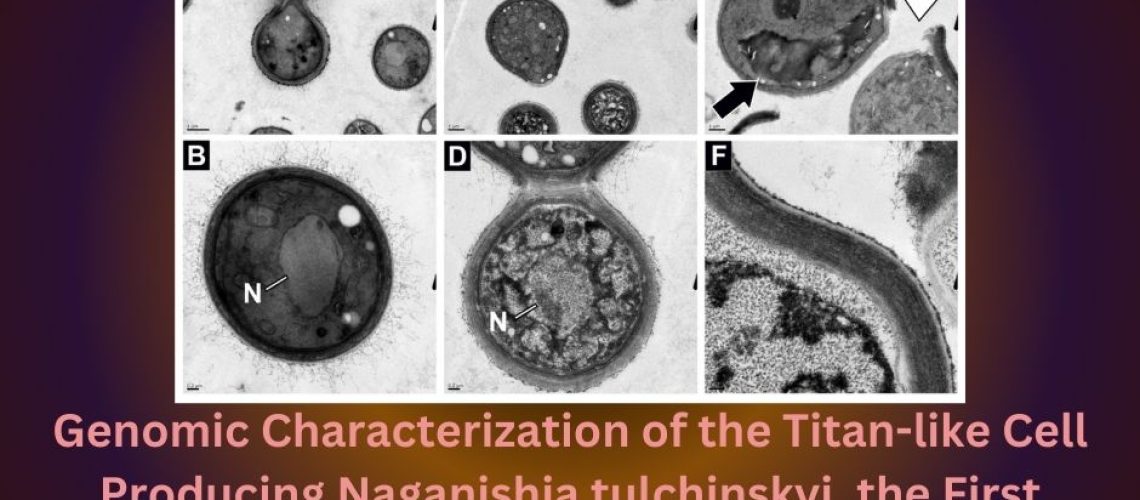
These ISS strains showed distinct morphological differences compared to Earth gravity-grown cells, including larger size, thicker cell walls, altered intracellular morphology, and modifications to extracellular structures.
🟣Contributions of the Paper
🔸Identification of a novel yeast species, Naganishia tulchinskyi, isolated from the International Space Station (ISS) exhibiting Titan cell-like morphology under specific conditions.
🔸Detailed morphological differences observed between microgravity-grown cells and Earth gravity-grown cells, including larger size, thicker cell walls, altered intracellular morphology, and modifications to extracellular structures.
🔸Phylogenetic analyses confirming the ISS strains as a single species in the genus Naganishia, clustered with Naganishia diffluens, leading to the proposal of the name Naganishia tulchinskyi .
🔸Assignment of gene ontologies related to cell morphogenesis, microtubule-based response, and response to UV light, indicating adaptations to microgravity and radiation.
🔸Genomic analyses revealing genes associated with Titan-like cell plasticity, cytoskeletal motor activity, microtubule motor activity, and nuclear export signal receptor activity.
🟤Practical Implications of the Paper
🔹Understanding the adaptations of Naganishia tulchinskyi to microgravity and radiation can aid in developing strategies for space exploration and long-duration missions .
🔹Insights into the morphological changes in microgravity-grown cells compared to Earth gravity-grown cells can contribute to biotechnological advancements in controlled environments on Earth.
🔹Identification of gene ontologies related to cell morphogenesis and response to environmental stressors can guide research in biomedicine and bioengineering.
🔹Knowledge of genes associated with Titan-like cell plasticity and cytoskeletal motor activity may inspire the development of new materials or technologies for various applications.
🟣Methods Used in the Paper
🔸Isolation of multiple strains of Naganishia tulchinskyi from environmental surfaces aboard the International Space Station (ISS).
🔸Growth of strains under simulated microgravity and 5% CO2 conditions to induce Titan cell-like morphology.
Utilization of confocal, scanning, and transmission electron microscopy to observe morphological differences between microgravity-grown and Earth gravity-grown cells .
🔸Phylogenetic analyses through multi-locus sequence typing to determine the relationship of ISS strains with Naganishia diffluens.
🔸Assignment of gene ontologies to understand cell morphogenesis, microtubule-based response, and response to UV light.
🔸Genomic analyses to identify genes associated with Titan-like cell plasticity and molecular functions like cytoskeletal motor activity.
🟤Data Used in the Paper
🔹Isolation of multiple strains of a novel yeast, Naganishia tulchinskyi, from environmental surfaces aboard the International Space Station (ISS).
🔹Observation of distinct morphological differences between microgravity-grown and Earth gravity-grown cells using confocal, scanning, and transmission electron microscopy.
🔹Phylogenetic analyses via multi-locus sequence typing to determine the relationship of ISS strains with Naganishia diffluens.
🔹Assignment of gene ontologies related to cell morphogenesis, microtubule-based response, and response to UV light to understand phenotypes suited for microgravity and radiation.
🔹Genomic analyses to identify genes associated with Titan-like cell plasticity and molecular functions like cytoskeletal motor activity.
🟣Results of the Paper
🔸Several yeast strains belonging to the Naganishia (Cryptococcus) diffluens clade of Filobasidiales were isolated from two different flight collection experiments conducted aboard the ISS.
🔸These strains, named IF6SW-B1 T, IF7SW-B1, IF1SW-F1, and IIF5SW-F1, were identified as novel species of the genus Naganishia through genomic characterization.
🔸The isolated strains exhibited Titan cell-like morphology (~10 µm diameter) when grown under simulated microgravity and 5% CO2 conditions aboard the ISS.
🔸Microscopy analyses showed distinct morphological differences between the cells grown in microgravity and those grown under Earth gravity, including larger cell size, thicker cell walls, altered intracellular morphology, and modifications to extracellular structures.
🔸Phylogenetic analyses revealed that the ISS strains belonged to a single species in the genus Naganishia, clustered with Naganishia diffluens, and proposed the name Naganishia tulchinskyi for these strains, with IF6SW-B1 T as the holotype.
🔸Gene ontologies assigned to the strains indicated responses to microgravity and radiation, including cell morphogenesis, microtubule-based response, and response to UV light.
🟤Conclusions from the Paper
🔹The novel yeast strains isolated from the International Space Station (ISS) were identified as a new species, Naganishia tulchinskyi, exhibiting Titan cell-like morphology under simulated microgravity and 5% CO2 conditions.
🔹Microscopy analyses revealed significant morphological differences between the cells grown in microgravity and those grown under Earth gravity, indicating cellular adaptations to space conditions.
🔹Phylogenetic analyses confirmed that the ISS strains represented a single species in the genus Naganishia, closely related to Naganishia diffluens, leading to the proposal of the new species name.
🔹Gene ontologies assigned to the strains highlighted their ability to respond to microgravity and radiation through various cellular processes, such as cell morphogenesis, microtubule-based response, and response to UV light.
🔹Genomic analyses indicated a set of genes associated with Titan-like cell plasticity, including those related to the extracellular region, outer membrane, and cell wall, as well as molecular functions like cytoskeletal motor activity and nuclear export signal receptor activity.
🟣Limitations of the Paper
🔸The study focused on a specific novel yeast species, Naganishia tulchinskyi, isolated from the International Space Station (ISS), limiting the generalizability of the findings to other microorganisms or environments.
🔸Due to the complexity of spaceflight conditions and the unique environment of the ISS, the direct applicability of the results to terrestrial settings may be limited .
🔸The research primarily explored the genomic and phenotypic characteristics of the novel Naganishia species, with limited emphasis on functional studies to elucidate the specific mechanisms underlying its adaptations.
🔸The study’s sample size, consisting of six yeast strains isolated from the ISS, may restrict the comprehensive understanding of microbial diversity and interactions within the space habitat.
🔸While the paper provides valuable insights into the Titan-like cell features and genomic landscape of N. tulchinskyi, further studies are needed to investigate its ecological role, potential interactions with other microorganisms, and broader implications for space biology and astrobiology research.
🔸The limitations of the study underscore the need for future research to expand the scope of investigations, incorporate additional experimental conditions, and explore the functional significance of the identified genetic elements and phenotypic traits in the context of space exploration and microbial ecology.
🟤Future Works Suggested in the Paper
🔹Conduct functional studies to elucidate the specific mechanisms underlying the adaptations of Naganishia tulchinskyi to space conditions, such as microgravity and radiation.
🔹Explore the ecological role of N. tulchinskyi in the ISS environment and its potential interactions with other microorganisms to better understand microbial dynamics in space habitats.
🔹Investigate the broader implications of the genomic characteristics and phenotypic traits of N. tulchinskyi for space biology, astrobiology research, and future long-duration space missions.
🔹Expand the scope of research to include additional experimental conditions that mimic spaceflight environments more accurately, such as increased CO2 levels and simulated microgravity, to further explore microbial responses to space conditions .
🔹Enhance the understanding of microbial diversity and interactions within the ISS by increasing the sample size and diversity of microorganisms studied, allowing for a more comprehensive analysis of microbial communities in space.
🔹Investigate the potential applications of the unique features of N. tulchinskyi, such as Titan-like cell morphology and genomic plasticity, for biotechnological purposes or as models for studying cellular responses to extreme environments.
🔹Collaborate with multidisciplinary teams to integrate findings from space microbiology research with other fields, such as bioinformatics, genetics, and astrobiology, to advance knowledge of microbial adaptations to space and their implications for human space exploration.
We value your ideas and feel free to comment below.
Martian To Be follow us 🤩
#mars #genomic
