
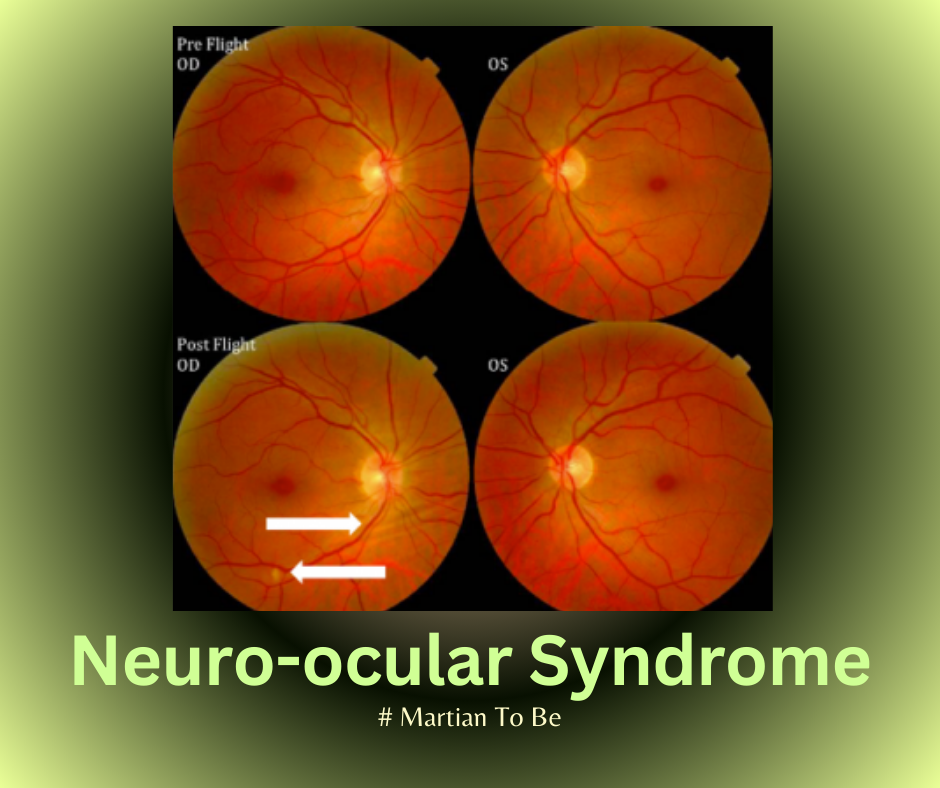
Spaceflight is a challenging environment for the human body. The lack of gravity, the radiation exposure, and the isolation can all have a negative impact on health. One of the most common health problems that astronauts experience is spaceflight associated neuro-ocular syndrome (SANS).
Spaceflight Associated Neuro-ocular Syndrome (SANS) is a constellation of eye and vision changes that have been observed in astronauts who have spent long periods of time in space. The most common symptoms of SANS are decreased near-visual acuity (hyperopic refractive shift), visual scotomas (blind spots), headaches, and deterioration of distance vision. Other possible symptoms include optic disc edema, globe flattening, choroidal folds, retinal folds, and increased intraocular pressure.
The exact cause of SANS is not fully understood, but it is thought to be due to a combination of factors, including the lack of gravity in space, the increased pressure inside the skull, and the decreased blood flow to the eyes. SANS is usually reversible after astronauts return to Earth, but some changes, such as the hyperopic refractive shift, may be permanent.
Researchers are studying ways to prevent SANS and to mitigate its effects. Some of the countermeasures that are being studied include exercise, eye drops, and CPAP therapy. Signs and Symptoms
The signs and symptoms of SANS can vary from person to person. The most common symptoms are: Decreased near-visual acuity (hyperopic refractive shift): This is a condition in which the eye is unable to focus on close objects. It is caused by the elongation of the eyeball in microgravity.Visual scotomas (blind spots): These are small areas of lost vision that can occur in the central or peripheral vision. They are caused by damage to the retina.Headaches: These are a common symptom of SANS. They are thought to be caused by the increased pressure inside the skull.Deterioration of distance vision: This is a less common symptom of SANS. It is caused by the flattening of the eyeball in microgravity.
Other possible symptoms of SANS includeOptic disc edema: This is a swelling of the optic nerve that can occur due to increased pressure inside the skull.Globe flattening: This is a flattening of the eyeball that can occur due to the lack of gravity.Choroidal folds: These are wrinkles in the choroid, a layer of tissue that nourishes the retina.Retinal folds: These are wrinkles in the retina, the light-sensitive layer at the back of the eye.Increased intraocular pressure: This is an increase in the pressure inside the eye. It is a less common symptom of SANS. Causes
The exact cause of SANS is not fully understood, but it is thought to be due to a combination of factors, including: The lack of gravity in space: The lack of gravity causes fluid to shift in the body, including to the head and eyes. This can put pressure on the optic nerve and the retina, leading to the symptoms of SANS.The increased pressure inside the skull: The lack of gravity also causes the brain to expand slightly. This can put pressure on the optic nerve and the retina, leading to the symptoms of SANS.The decreased blood flow to the eyes: The lack of gravity can also decrease the blood flow to the eyes. This can cause the retina to swell, leading to the symptoms of SANS.
 Diagnosis
The diagnosis of SANS is based on the patient’s history, physical examination, and imaging studies. The physical examination may reveal signs of SANS, such as optic disc edema or choroidal folds. Imaging studies, such as an optical coherence tomography (OCT) scan, can be used.
SANS is usually reversible after astronauts return to Earth, but some changes, such as the hyperopic refractive shift, may be permanent. Here are some of the countermeasures that are being studied:Exercise
Regular exercise can help to reduce the amount of fluid that shifts to the head and eyes.Eye drops
Eye drops that can reduce inflammation and swelling in the eyes are being studied.CPAP
Continuous positive airway pressure (CPAP) therapy, which is used to treat sleep apnea, is being studied as a way to reduce the pressure inside the skull.
SANS is a serious condition that can affect the vision of astronauts. However, researchers are working hard to find ways to prevent and mitigate its effects.
We value your ideas and feel free to comment below.
